Genetics and Development
MSc Coordinator of the Master in Genetics and Development
Prof. Dr. Alex Hajnal (alex.hajnal * mls.uzh.ch)
Study Coordinator
PD Dr. Karin Isler (studienkoordination * biol.uzh.ch)
OVERVIEW
Genetics describes the functions and inheritance of genes. Moreover, genetic techniques are used to investigate fundamental biological processes such as development, growth, aging, metabolism and behavior. Molecular genetics provides a basis for studying the diversity and evolution of all living organisms and is increasingly applied in the diagnostics of many human diseases. In the Master's program in Genetics and Development, students obtain detailed insight into the state-of-the-art methods in Molecular Genetics, Genomics and Developmental Biology. The ethical implications of newly emerging technologies are discussed.
MASTER'S DEGREE COURSE
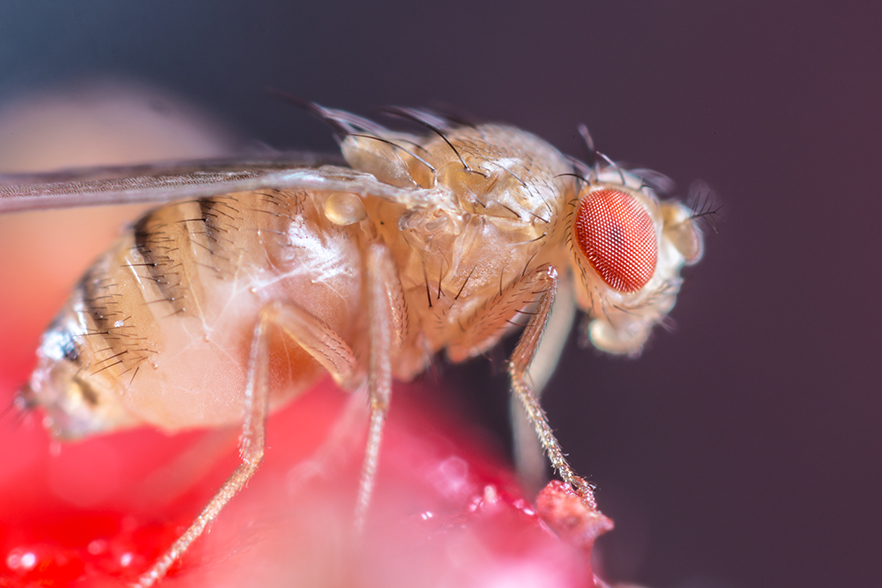
The central element of the program is the Concepts lecture in Modern Genetics and Genomics combined with the seven-week block course in Modern Genetics and Genomics . This laboratory course gives students an introduction to both theory and experimental practice in Genetics and Developmental Biology using different animal model organisms (fruit fly, Drosophila melanogaster; threadworm, Caenorhabditis elegans, and zebrafish Danio rerio). By performing individual research projects, students get to know the different research groups and the methods they use. The students expand on this knowledge in additional, freely selectable modules (lectures and courses on subjects including developmental biology, molecular biology and human genetics). During their Master's thesis, students experimentally investigate a biological or medical question in one of the research groups participating in this Master's program.
GUIDELINES
COMPULSORY MASTER'S PROGRAMME IN GENETICS AND DEVELOPMENT (at least 90 ECTS credits)
A Learning Agreement has to be worked out at the start of the MSc.
General Information on the Master's in Biology
| Coursework |
20 ECTS at least |
|
|
Master's thesis BIO 503 |
60 ECTS |
For a list of research groups see below. |
|
Integrative Knowledge in Biology BIO 520 |
10 ECTS |
Exam |
1 One day in September or February. The module should be taken before writing the Master’s Thesis.
2 If the compulsory block course BIO323 has already been completed during the Bachelor's degree programm, a maximum of two block courses must be selected from the BLOCK COURSE list below.
3A maximum of 12 ECTS from block courses (WP2) can be counted toward the Master's degree, including compulsory block courses and courses completed during the Bachelor's degree and transferred to the Master's. Elective modules worth 5 ECTS can be selected from UZH and ETH Zurich, subject to the relevant requirements and approval by the Master's thesis supervisor and Master's coordinator. Modules must be Master's-level. Introductory Bachelor's modules in Biology, Biomedicine or Biodiversity are not eligible. The supervisor advises on the suitablility of elective modules. Research internships cannot be credited toward the Master's degree. The supervisor or Master's coordinator can require additional modules beyond 20 ECTS of coursework to address knowledge gaps relevant to the Master's specialisation or project. These must be included in the Learning agreement. More information on coursework
STRONGLY RECOMMENDED
| BIO 347 | 03 ECTS | Concepts in Developmental Biology: from Cells to Animals |
RECOMMENDED LECTURES
| BCH 310 | 03 ECTS | Biochemistry III |
| BCH 252 | 03 ECTS | RNA & Proteins: Post-Transcriptional Regulation of Gene Expression |
| BIO 243 | 03 ECTS | Epigenetics |
| BIO 257 | 03 ECTS | DNA Metabolism and Cancer |
| BIO 344 | 03 ECTS | Development of the Nervous System |
| BIO 388 | 03 ECTS | Human Genetics |
| BIO 390 | 03 ECTS | Introduction to Bioinformatics |
| BIO 416 | 03 ECTS | Microscopy |
| BME 320 | 01 ECTS | Forensic Genetics |
| BME 327 | 02 ECTS | Current Approaches in Single Cell Analysis |
BLOCK COURSES
| BIO 245 | 06 ECTS | Cell Signalling |
| BIO 253 | 06 ECTS | Research Cycle in Genomics |
| BIO 255 | 06 ECTS | Finding and Solving Interesting Problems in Molecular Life Sciences |
|
BIO 260 |
06 ECTS |
Molecular Biology Course for Biology and Medicine |
|
BIO 285 |
06 ECTS |
Genetic & Epigenetic Control of Plant Development |
|
BIO 286 |
06 ECTS |
Plant Sensing |
|
BIO 321 |
06 ECTS |
Modern Microscopy in Life Science Research |
|
BIO 325 |
06 ECTS |
Systems Dynamics in Cell and Developmental Biology |
|
BIO 392 |
06 ECTS |
Bioinformatics of Molecular Sequence Variation |
|
BIO 407 |
06 ECTS |
Advanced Microscopy |
|
BIO 413 |
06 ECTS |
Genome Modification in Mammals |
|
BME 308 |
06 ECTS |
Human Molecular Genetics |
|
BME 312 |
06 ECTS |
Epigenetics and Disease |
| EEE 335 | 06 ECTS | Human Evolutionary Genetics |
| EEE 336 | 06 ECTS | Genetic Diversity for Conservation |
|
EEE 338 |
06 ECTS |
Evolutionary and Ecological Functional Genomics |
RESEARCH GROUPS LEADERS FOR MASTER THESES
| Prof. Dr. | Bachmann-Gagescu Ruxandra |
| Prof. Dr. | Brunner Damian |
| Prof. Dr. | Cavazza Tommaso |
| Prof. Dr. | Domcke Silvia |
| Prof. Dr. | Grossniklaus Ueli |
| Prof. Dr. | Hajnal Alex |
| Prof. Dr. | Müller Martin |
| Prof. Dr. | Neuhauss Stephan |
| Prof. Dr. | Polymenidou Magdalini |
| Prof. Dr. | Simonini Sara |
| Prof. Dr. | Stoeckli Esther |